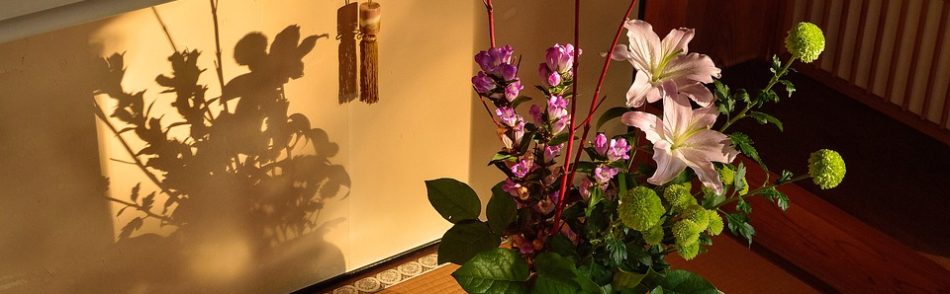
How to enjoy in Japan for tourists and residents
Ranking

kado -Atelier SOKA-アトリエ双香
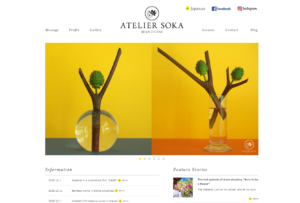
World-wided “ikebana” class you can take
In Atelier SOKA, you can learn Sogetsu-ryu ka-do. The host, Mika Otani, is successful in the world. In 2019, She held a workshop and demonstrated in a famous perfume shop in Rome. And she gave a lecture on ka-do in Warsaw university in Poland. She also appeared on a PR film of Swiss Air Transport Co., Ltd. You can read the articles and see the art works in Instagram.
https://www.instagram.com/mikaotani_flowers/
●Check point1
Directly teaching by the world-wide host MIka Otani
●Check point2
3 classrooms the host teaching in
●Check point3
Sogetsu-ryu, the liberal style
●Check point4
So many foreign people and able to take classes in English

Bonsai -Shunka-en Bonsai museum-春花園盆栽美術館
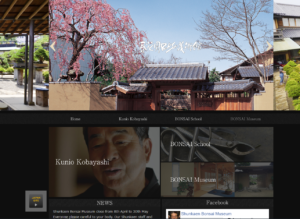
Making a miniature landscape
Bonsai is “the trees planted in a container”. It is a traditional art. Making miniature landscape, you can feel nature in a container. Shunka-en teaches you how to care, grow, style the bonsai trees.
Trial lesson is held every day but Sunday. Usual lesson is held on Sundays.
●Check point1
Able to learn authentic Bonsai culture
●Check point2
Usual lessons by the Bonsai authority
●Check point3
The international apprentice system
●Check point4
Available for both visitors and residents

Wagashi -Yu-art Kichijoji- Yu-art 吉祥寺
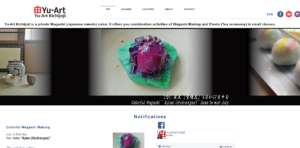
Yu-art Kichijoji is a small salon in which you can make wagashi Japanese traditional sweet. You can enjoy wagashi and sado.
Wagashi is Japanese traditional food.
You can see the way to make wagshi on the website. Therefore, you can check it again at home.
●Check point1
Able to enjoy wagashi and sado
●Check point2
The location a little away from downtown
●Check point3
Kichijoji station pickup and drop-off
●Check point4
Available for both visitors and residents

Shodo -Udoyoshi shodo class- うどよし書道教室
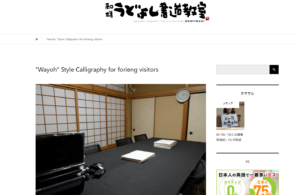
Few classes for wayo
Udoyoshi shodo class teaches wayo style calligraphy. Wayo is Japanese traditional calligraphy style. Japan has pretty many calligraphy classrooms. However, there are few classes teaching wayo style. It may not look like a letter but like a picture.
The figure includes Japanese mind.
●Check point1
Many foreign students coming
●Check point2
Easy to start to learn
●Check point3
Writing with sitting on chair. (don’t need to SEIZA)
●Check point4
Available for both visitors and residents

Noh and Nihon-buyo -Approching Tokyo Tradition-日本の伝統に触れよう
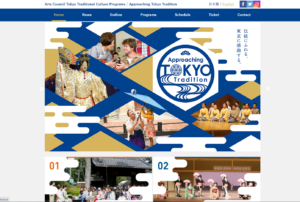
Various Japanese performances
Noh and Nihon-buyo are traditional Japanese dances. Noh is Japanese style opera, which include dance with song. Each program has each story. On the other hand, nihon-buyo is dance with music with Japanese traditional instruments.
This project is produced by Tokyo Metropolitan Foundation for History and Culture. The project has a lot of classes for beginners.
●Check point1
Having experiences of various performing arts
●Check point2
Almost all program is single lesson
●Check point3
Some special lessons for foreign people
●Check point4
All lessons for beginners
Ranking
kado -Atelier SOKA-アトリエ双香
Bonsai -Shunka-en Bonsai museum-春花園盆栽美術館
Wagashi -Yu-art Kichijoji- Yu-art 吉祥寺
Shodo -Udoyoshi shodo class- うどよし書道教室
Noh and Nihon-buyo -Approching Tokyo Tradition-日本の伝統に触れよう