Noh the traditional Japanese drama
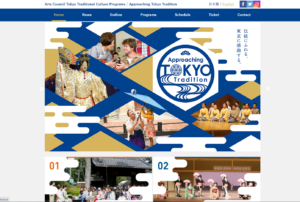
Noh is the one of traditional Japanese art. It is a kind of classical Japanese dance-drama. Noh has been played since 14 century. Noh is one of the oldest plays in the theater and has been registered as an intangible cultural asset. The story of the Noh program based on the classical stories.
This page shows some famous Noh programs.
Hagoromo ~the magic feather robe~
On a spring morning, on the pine beach of Miho, a fisherman named Hakuryo found a beautiful robe hanged on the branch of a pine tree. He would take the robe, then an aerial fairy appeared. She told the man that she wanted him to take the robe back because she could not go back to the aerial world.
The man told the fairy that he would take it back in return for her showing her dance (It was said that the aerial fairy dance bring good luck to the watcher.). However, the fairy asked him to take it back before her dancing. He got angry to hear that because he thought she would go back the aerial world without dancing.
She said “I can never break promises because I am an inhabitant of the aerial world. Man is the only being in the world.”
The man was ashamed of his saying and handed the robe to the aerial fairy. Having received the robe, she danced as she had promised. Then she went back to her home.
The pine wood hanged the robe on still exists in Shizuoka. It is one of the famous scenic spot in Shizuoka prefecture in Japan.
Dojo-ji temple ~the serpent-spirit and the temple bell~
Long time ago, Dojo-ji temple (in Wakayama prefecture) had no temple bell. Each temple has temple bell because the bell showed the times of day to people with the sound. The hanged bell is so huge and heavy that a few people can go inside of the bell.
The priest in Dojo-ji rebuilt the temple bell, and the ceremony of rebuilding was held. Then a monk in Dojo-ji noticed a female shaman dancer came in front of the temple. The monk had been told, “Never allow female to enter the temple with some reasons.” (In Japan, temples were monastery or convent in general in those days. Therefore, some monastery prohibited female from entering. Dojo-ji was not a stern monastery, but the other reasons prohibited from entering.) The female shaman enthusiastically entreated her to go in and to dance for the ceremony. Finally the monk permitted her to enter. She approached the rebuilt temple bell, then jumped into the bell. The priest hearing that, he started talking about what had happened in Dojo-ji many years before.
“Long time before, a young girl lived in a village near Dojo-ji. She was a daughter of a person in authority. Every year a trainee monk visited the village on the way of annual ascetic practices. The girl fell deeply in love with the trainee monk. She seriously asked him to marry. He answered yes because he thought she was kidding. Later, she was waiting for his taking, but he did never.
She felt he betrayed her. One day, as he stayed near Dojo-ji, she heard that. As she knew that, she became a serpent with rage and chased the trainee monk. As he knew that, he ran into Dojo-ji and hided in the temple bell. The bell was so heavy that she could not move it by herself. Winding around the bell, she burned herself with fury flame. Her body and the bell was blazing. Finally, they were burned out. Of course, the man were also.”
That was the reason why Dojo-ji had had no temple bell. The priest thought that the female shaman was the embodiment of the girl’s rage. He coming to the new temple bell, a serpent was there.
The priest gathered the other priests and monks. They prayed for god to exorcise the fury spirit. The serpent revealed the girl’s looking. Burning the body, she was vanishing.
comprehensive arts on the stage
Noh has a lot of plays. Some plays are heroic tales. Some are love romances. Some are human-interests. And some are fairy tales. A lot of plays are famous in Japanese. However, a lot of Japanese have never seen Noh plays in the theater.
Most play needs masks called “Noh-men”. “Men” means head or mask in Japanese. Most Noh actors are male and they play female roles with masks.
Noh is a kind of comprehensive arts. How about going seeing Noh as you visit Japan?